
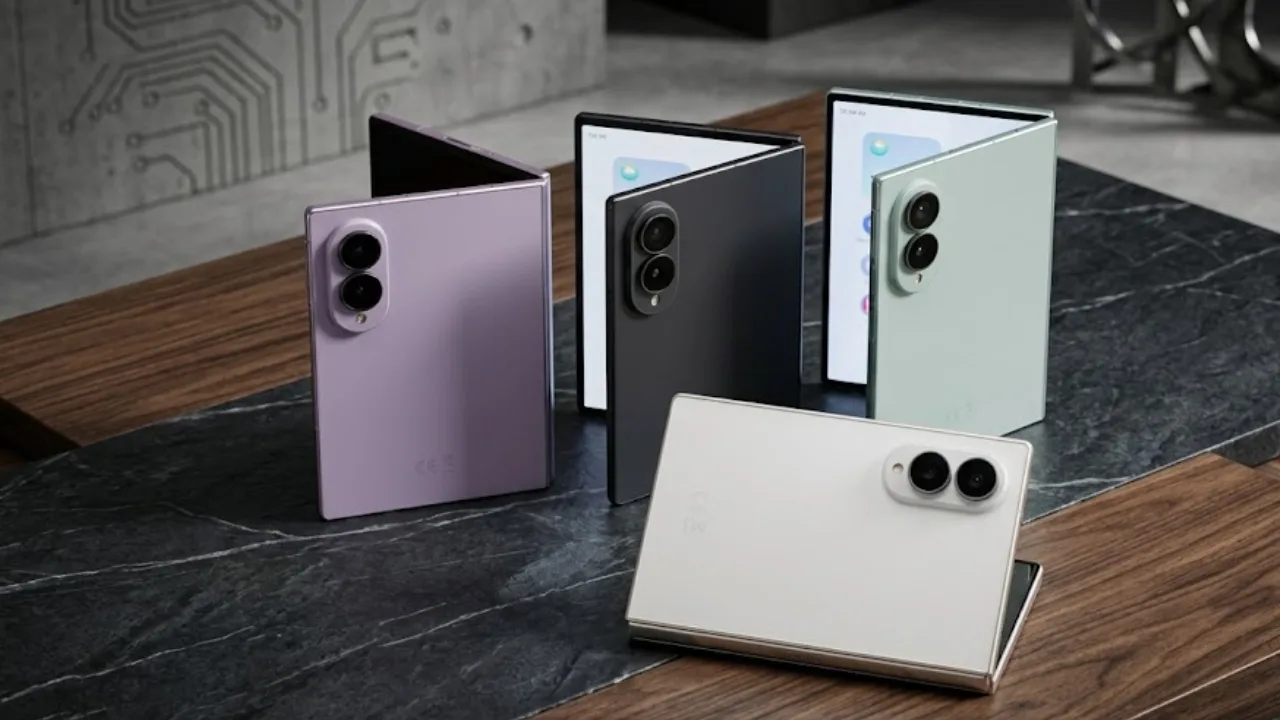
Samsung Galaxy Z Fold 8 Review: Has Samsung Finally Nailed the Foldable Form Factor?
It has been seven years and eight generations of devices since the original Galaxy Fold made its rocky debut. Over that time, the foldable smartphone market has evolved from a quirky experimental niche into a battleground for premium mobile hardware. Yet for years, Samsung stuck stubbornly to its signature design: a tall, narrow outer screen that felt like holding a TV remote control, opening up into an inner display that sat awkwardly between a phone and a tablet.
Meanwhile, rival tech giants—especially across Asian markets—began experimenting with radically different shapes: wider cover screens, ultra-thin profiles, and specialized tablet-style aspect ratios.
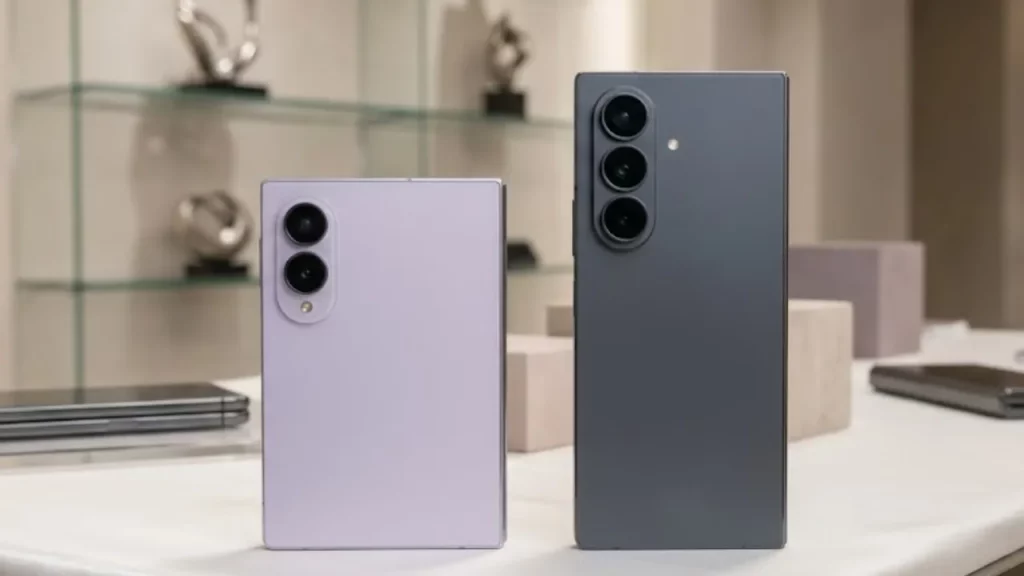
Now, with the release of the Galaxy Z Fold 8, Samsung is finally making its most dramatic design shift in years. Adopting a distinctly wider “passport” style outer display often referred to as the “Wide” design, Samsung aims to reclaim its throne in the foldable arena. But does this bold redesign fix the long-standing flaws of the series, or does it simply trade one set of compromises for another? Let’s dive into our hands-on review.
Samsung Galaxy Z Fold 8
- Ultra-slim design with virtually imperceptible display crease
- Flagship performance backed by advanced Galaxy AI productivity features
- Brilliant Dynamic AMOLED 2X main & outer displays with peak brightness
- Enhanced durability with IPX8 water resistance & Armor Aluminum frame
- High premium price point positions it strictly in the enthusiast segment
- Charging speeds remain conservative compared to competitors
- S Pen slot is still not built directly into the slim chassis
The Samsung Galaxy Z Fold 8 cements Samsung’s leadership in the foldable category with a dramatically refined, ultra-thin chassis and a fold crease that is nearly invisible. Combined with seamless Galaxy AI multitasking and top-tier display quality, it stands as the ultimate mobile productivity device. Despite its high price tag, power users and tech enthusiasts will find it to be an unmatched foldable experience.
1. Unboxing and Design: The “Passport” Ratio Takes Center Stage
The moment you pull the Galaxy Z Fold 8 out of its sleek black box, the transformation is obvious. The cramped outer screen of the past is officially gone. Instead, you’re greeted by a wide, well-proportioned cover display that actually feels like a standard flagship smartphone when folded.
What’s in the Box?
Samsung continues its minimalist approach to packaging. Inside, you get:
- The Galaxy Z Fold 8 device
- A USB-C to USB-C charging cable
- A SIM ejector tool
- Basic quick-start documentation
(Note: In line with recent industry trends, a wall charger and protective case are sold separately.)
Weight and Hand Feel
Despite the wider footprint, the engineering team managed to perform a minor miracle on the scales: the device weighs in at a remarkably light 201 grams. Hold it in your hand, and it feels noticeably lighter and less cumbersome than many non-folding flagship “Ultra” phones or heavy Chinese foldables.
Hinge Tactility & The “Snapping” Mechanism
Interesting changes have occurred under the hood regarding the hinge mechanics. Previous generations used a stiff flex-mode hinge that required continuous force to open and close, designed primarily to let the phone prop itself up at any arbitrary angle.
The Z Fold 8 returns to a smoother, tactile mechanism reminiscent of classic flip phones. Once you unlatch the display past a certain angle, a smooth internal assist mechanism takes over and comfortably guides the phone into its fully flat orientation with a satisfying snap. Furthermore, a reinforced internal titanium plate works beneath the flexible panel to significantly reduce the visible center crease compared to previous models.
2. Displays & Ergonomics: Phone vs. Tablet Balance
The fundamental question with any foldable device is simple: How good is the outer phone, and how useful is the inner tablet?
| Display Feature | Cover Display | Main Internal Display |
| Size | 5.5-inch Dynamic AMOLED | 7.6-inch Flexible AMOLED |
| Form Factor | Standard Wide Smartphone Ratio | Near-Square (Approx. 4:3 Aspect Ratio) |
| Special Coating | Standard Anti-Reflective Glass | Advanced Low-Glare Matte Coating |
The Outer Screen Experience
With the new wider aspect ratio, typing out a quick text message or navigating map directions on the outer display feels natural. You no longer suffer from cramped keyboard layouts or awkwardly squeezed app interfaces when the phone is closed.
The Inner Display: A Double-Edged Sword
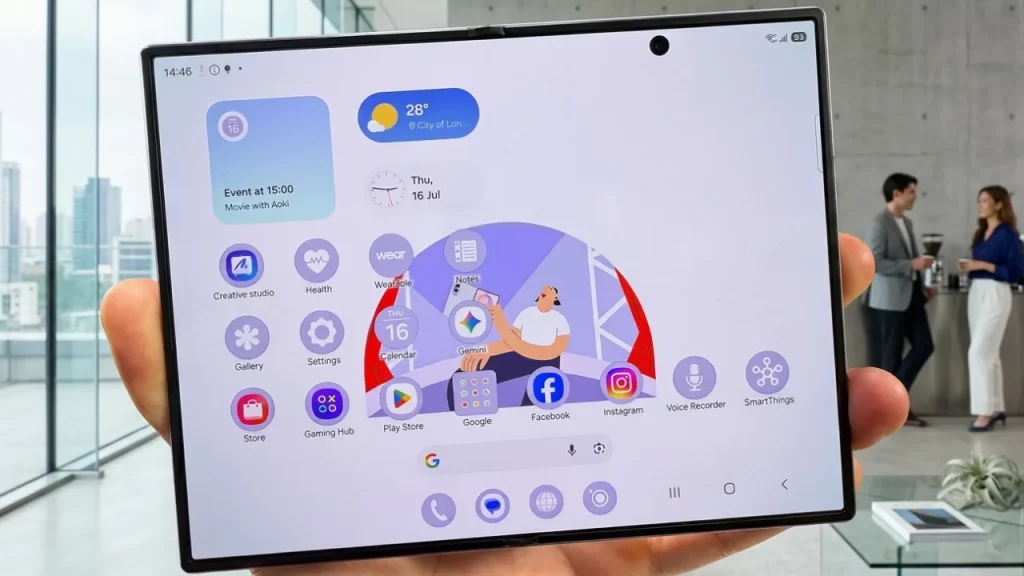
Unfolding the Z Fold 8 reveals a sprawling 7.6-inch canvas equipped with an impressive new anti-reflective coating that tames glare under harsh ambient lighting. However, the wider outer screen means the unfolded inner screen now sits almost at a 4:3 aspect ratio—a near-perfect square.
- For Video Content: If you love binge-watching widescreen (16:9 or 21:9) movies, you will notice thick black letterboxing bars on the top and bottom. However, for 4:3 content or IMAX-formatted media, the video fills almost the entire display.
- For Multitasking & Productivity: The 4:3 canvas is an absolute joy for split-screen multitasking. Running two apps side-by-side effectively gives you two standard phone interfaces side-by-side without squeezing any text.
3. Under the Hood: Specifications & Hardware
When it comes to raw processing power and camera specs, the Galaxy Z Fold 8 packs high-end components tailored for modern power users.
- Processor: Qualcomm Snapdragon 8 Elite (Gen 5) for Galaxy
- RAM & Storage Options: 12 GB RAM standard (up to 16 GB on higher tiers), with storage options ranging from 256 GB up to 1 TB.
- Rear Camera Array:
- 50 MP Main Primary Sensor
- 50 MP Secondary Sensor
- 12.5 MP Ultra-Wide Lens
- Dedicated Telephoto Lens with optical zoom
- Battery Tech: Next-gen 5,000 mAh Silicon-Carbon battery
- Build Protection: IP47 dust and water resistance rating
The adoption of silicon-carbon battery technology is a major highlight here, allowing Samsung to fit a larger capacity cell inside a thinner, lighter chassis without sacrificing thermal efficiency or battery longevity.
4. Real-World Software Performance & App Scaling Quirks
While hardware engineering has reached impressive heights, software optimization remains the wildcard for foldables. Running standard Android applications on a square screen often reveals layout quirks.
App Optimization Breakdown
- Aspect Ratio Stretching: Popular social media apps and shopping platforms like AliExpress or Instagram sometimes struggle to scale smoothly on the unfolded screen. Rotating the device can occasionally cause apps to force-restart or display oversized UI elements.
- Theme Toggling: Changing between Light and Dark mode while inside certain apps may trigger unexpected app reloads on the main display.
- Synthetic Benchmarks: Early software builds have shown strict background power controls that may temporarily block or restrict third-party synthetic benchmarking suites out of the box.
When apps are properly optimized, the software experience is fluid and powerful. However, Android developers across the board still need to catch up to ensure every app seamlessly adapts to folding displays.
5. Practical Ergonomics: Wireless Charging & Accessory Quirks
A subtle detail that potential buyers should keep in mind involves the internal layout changes.
Because Samsung redesigned the rear camera module and altered the lower body structure, the internal wireless charging coil is positioned lower on the back panel than on standard smartphones.
If you frequently use flat wireless charging pads or snap-on magnetic power banks, you may need to adjust their positioning to line up accurately with the coil. Additionally, without native built-in magnetic rings, users who prefer magnetic cardholders or car mounts will need to rely on compatible magnetic phone cases.
6. The Verdict: Is the Galaxy Z Fold 8 Worth It?
Samsung created the mainstream foldable market, but the competition is stiffer today than it has ever been. Rival manufacturers are pushing hardware boundaries, and upcoming entries from other tech giants promise to shake up the market even further.
The Galaxy Z Fold 8 represents Samsung listening to user feedback. By widening the cover screen, lightening the chassis to 201 grams, and improving hinge mechanics, they have created a device that is genuinely enjoyable to use as an everyday smartphone when folded, while offering a vast canvas when opened.
Who Should Buy It?
- Power Users & Multitaskers: If you frequently split screen between work apps, documents, and messaging, this wider inner canvas is unbeatable.
- Tech Enthusiasts: Anyone looking for cutting-edge silicon-carbon battery tech, light weight, and a premium foldable screen.
If you have been holding off on foldables because the outer screens felt too narrow, the Z Fold 8 might finally be the phone that convinces you to make the unfold!

The Samsung Galaxy Z Fold 8 cements Samsung’s leadership in the foldable category with a dramatically refined, ultra-thin chassis and a fold crease that is nearly invisible. Combined with seamless Galaxy AI multitasking and top-tier display quality, it stands as the ultimate mobile productivity device. Despite its high price tag, power users and tech enthusiasts will find it to be an unmatched foldable experience.
